
BPG Logo
Resources

Glossary

Maritime and investment terminology explained. A comprehensive reference for industry-specific terms.

Reference

Maritime Terminology

46 essential terms covering vessel types, charter structures, market benchmarks, and operational concepts.

A
Annual Survey
Mandatory yearly inspection conducted by a classification society on behalf of the flag state.
Asset Value
The market price of a vessel in the sale & purchase market.
B
Baltic Exchange
Independent organization publishing global freight rate benchmarks.
Bareboat Charter
Charter agreement where the charterer takes full operational control of the vessel, including crew and management.
Bill of Lading (B/L)
Document issued to the merchant by the carrier after cargo has been loaded onboard. It serves three vital functions: receipt for the cargo, evidence of the terms of the contract for carriage, and document of title.
Brokerage Commission
Commission paid to a shipbroker, typically a percentage of freight or hire.
Bulk Carrier
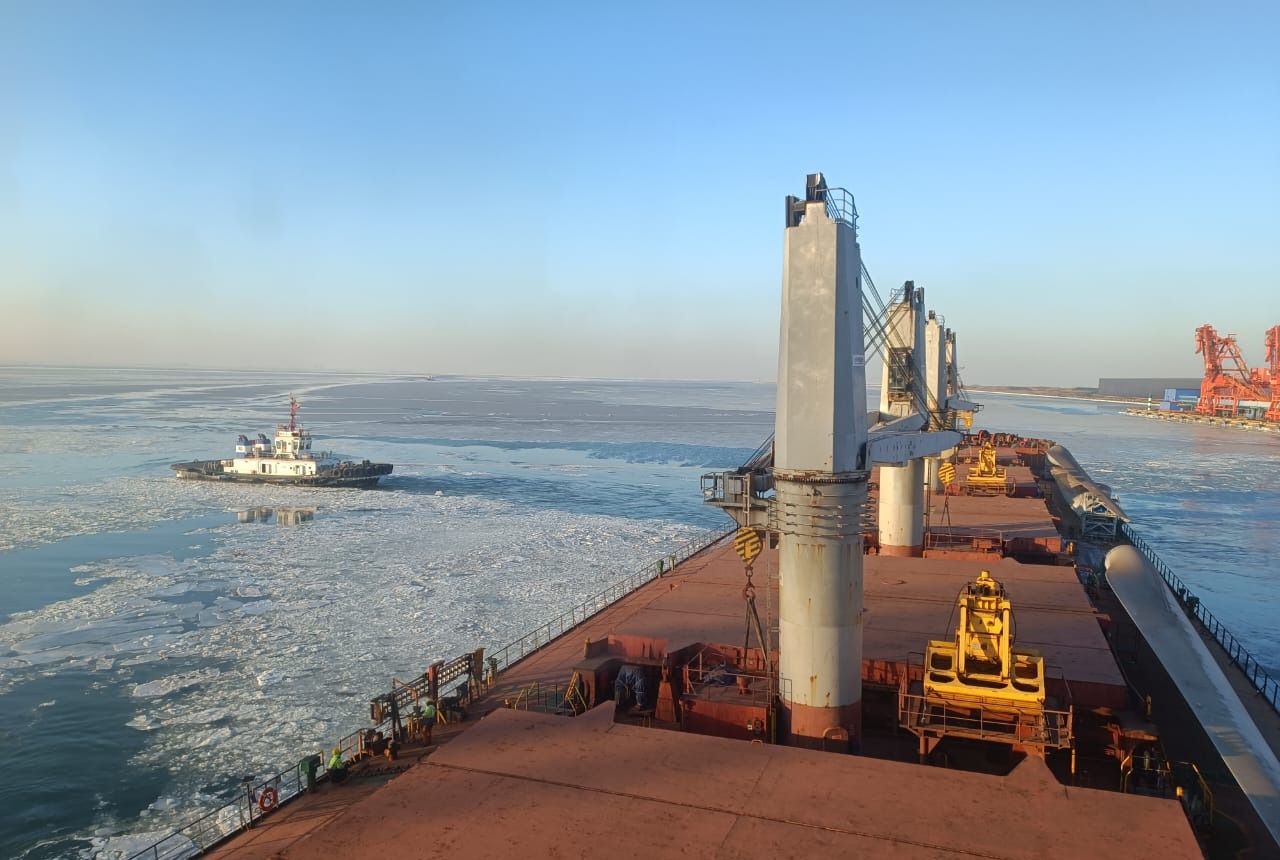
A vessel designed to transport unpackaged dry commodities such as iron ore, coal, and grain.
Bunkers
Marine fuel (fuel oil or diesel) consumed by the vessel.
C
Capesize
Large dry bulk vessels (typically 150,000-200,000 DWT) mainly used for iron ore and coal trades.
Charter
The hiring of a vessel for transporting cargo.
Charterer
The party hiring the vessel.
Charter Party
Legal contract defining terms of cargo transportation by sea.
Charter Hire
Revenue earned under a charter agreement.
Classification Society
Independent organization certifying vessel construction and maintenance standards (e.g., DNV, Lloyd's Register).
D
Drydocking
Scheduled removal of a vessel from the water for inspection, repairs, and maintenance.
DWT (Deadweight Tonnage)
Measure of a vessel's total carrying capacity, including cargo, fuel, water, and supplies.
F
Fixture
Conclusion of the negotiations between shipowner and charterer, generally through shipbrokers, resulting in the charter of a ship.
Flag State
Country where the vessel is registered and whose laws it follows.
Freight Rate
Price paid for transporting cargo by sea.
H
Handysize
Small-to-medium-sized dry bulk carriers (geared), typically ranging from 25,000 to 40,000 DWT.
Hire Rate
Agreed daily payment for vessel use under a time or bareboat charter.
Hull & Machinery (H&M)
Insurance covering physical damage to the vessel.
I
IMO
International Maritime Organization — UN agency regulating global shipping safety and environmental standards.
Incoterms
International Commercial Terms — pre-defined commercial terms and rules used in international trade, accepted by governments globally.
ISM Code
International Safety Management Code governing ship safety procedures.
L
Laytime
Time allowed for loading or unloading cargo.
Letter of Credit (L/C)
Assurance from a bank on behalf of an importer to pay the seller a specified amount if the seller submits the required documents.
M
MARPOL
International convention preventing pollution from ships.
N
Newbuilding
Vessel under construction or recently delivered from shipyard.
O
Off-Hire
Period when a vessel is unavailable for service (repairs or technical issues).
Operating Days
Days a vessel is available and earning revenue.
Operating Costs (OPEX)
Daily running costs including crew wages, insurance, repairs, and maintenance.
Orderbook
Total number of vessels on order at shipyards, indicating future fleet supply growth.
P
Panamax
Vessel size originally designed to transit the Panama Canal (approx. 65,000-85,000 DWT).
P&I (Protection & Indemnity)
Insurance covering third-party liabilities such as cargo claims, pollution, and crew injury.
P&I Club
Mutual insurance association providing P&I coverage.
S
Scrap Value
Residual value of a vessel sold for recycling.
Shipbroker
A shipbroker may act as a chartering agent negotiating charter terms, a sale and purchase broker for vessel transactions, a ship's agent attending to a vessel and crew at port, or a loading broker finding cargo for a ship.
Special Survey (S/S)
Major inspection conducted every five years by a classification society.
Spot Market
Market where vessels are chartered for single voyages.
Supramax / Ultramax
Mid-sized dry bulk vessels (approx. 50,000-66,000 DWT) offering trade flexibility.
T
TCE (Time Charter Equivalent)
Standardized earnings metric calculated as revenue minus voyage expenses divided by operating days.
Time Charter
Charter where the owner provides crew and technical management, and the charterer pays daily hire plus voyage costs.
Ton-Mile Demand
Measure of shipping demand calculated as cargo volume multiplied by distance transported.
V
Voyage Charter
Charter agreement for a single voyage between specific ports.
W
War Risk Insurance
Insurance covering losses due to war, piracy, or geopolitical conflict.

Need More Information?

Explore our FAQ or contact our team for detailed explanations of maritime investment concepts.